Club History
1920s – Founding and Formation
1
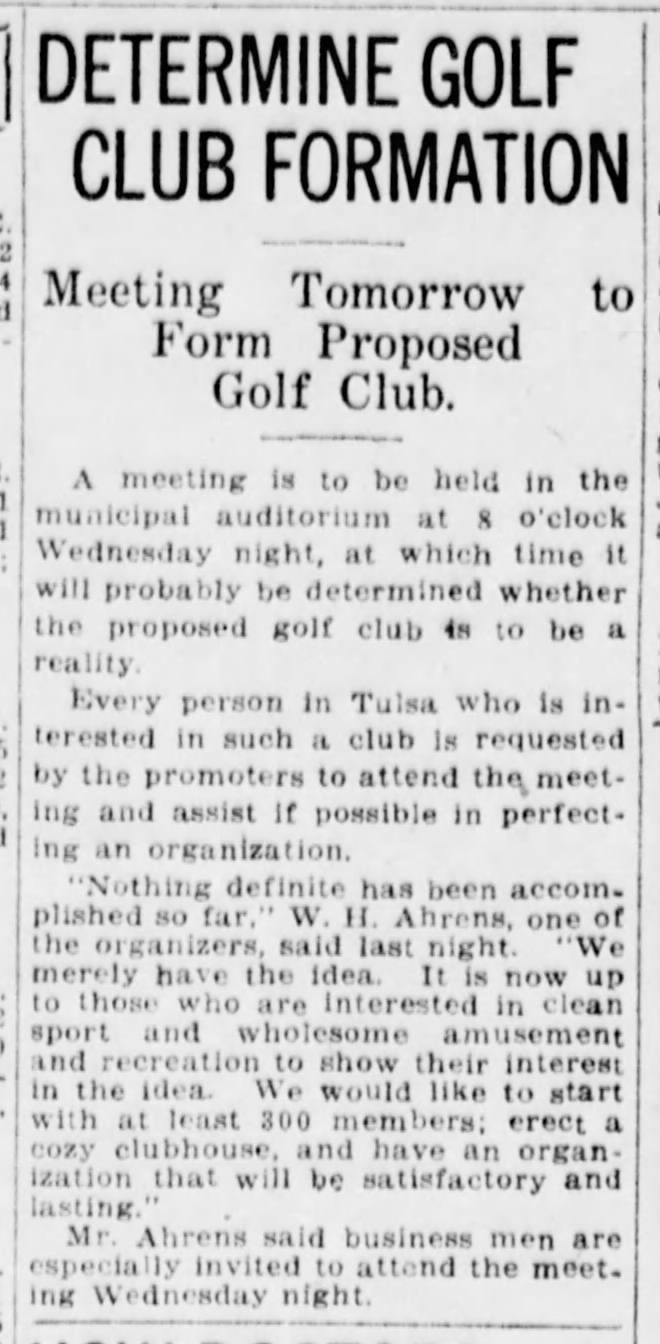
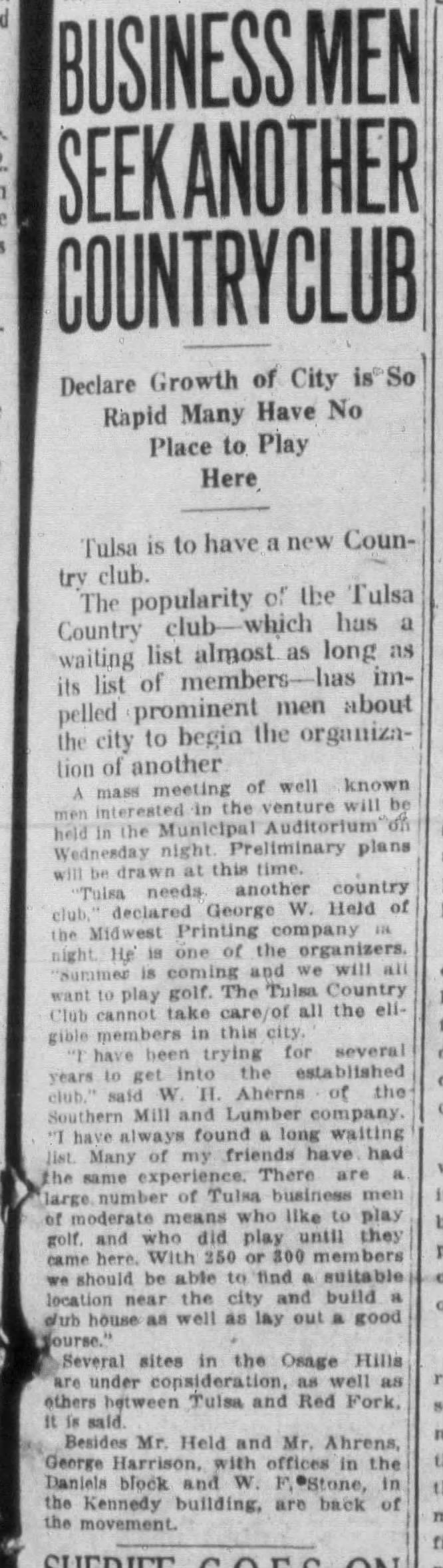
1920 (April 11): A group of Tulsa businessmen publish a notice calling for a new country club.
In the spring of 1920—at the height of Tulsa’s growth—a small group of civic-minded businessmen issued a public call to create a new country club for the community. Their notice invited interested supporters to gather and help shape what would soon become one of Tulsa’s enduring private club traditions.
2
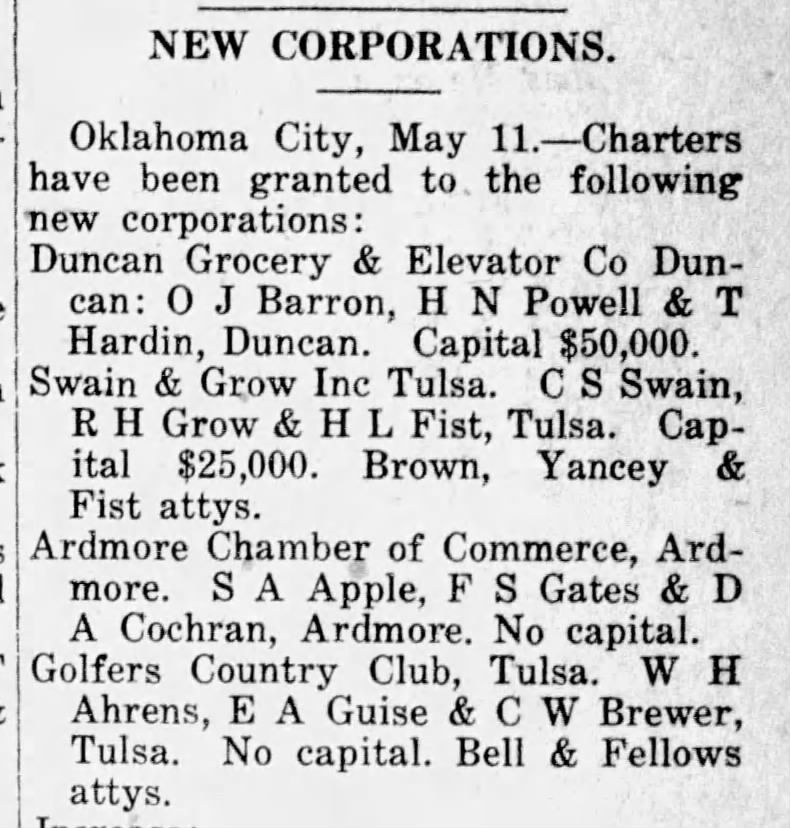
May 11, 1920: The club is officially incorporated as Golfers Country Club.
Just a month later, that early momentum became official. On May 11, 1920, the organization was incorporated as Golfers Country Club, establishing the structure, leadership, and shared vision needed to bring a first-class club experience to life.
3
1921 (June 16): Land purchased for 160 acres southwest of Tulsa.
After months of searching for the right setting, the club secured 160 acres southwest of Tulsa in 1921—an inspiring site with elevation and views, perfectly suited for a championship golf course and a welcoming clubhouse campus.
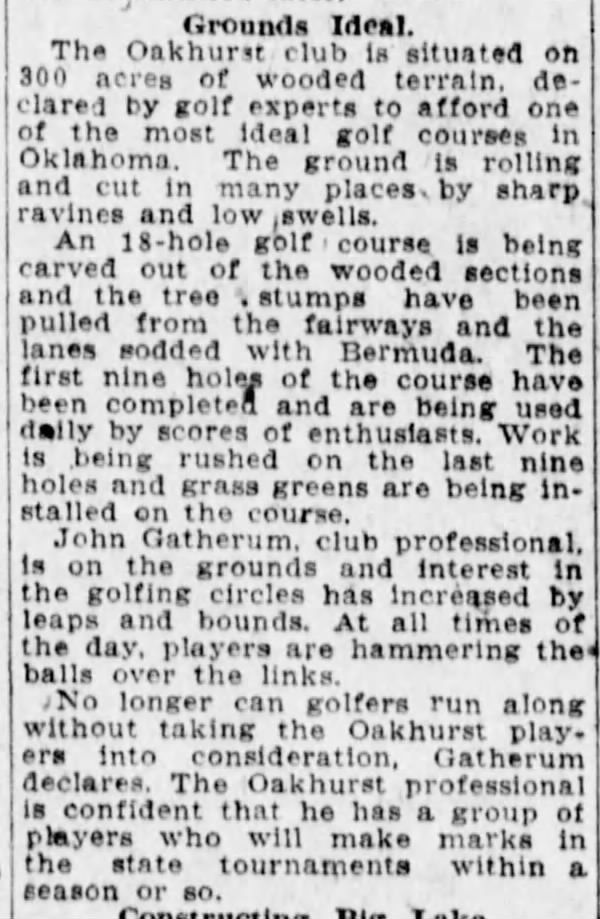
4
1921 (Summer): Renamed Oakhurst Country Club after the nearby village of Oakhurst.
As the club’s identity took shape, it adopted the name Oakhurst Country Club, honoring the nearby village and anchoring the club to the place it would call home.
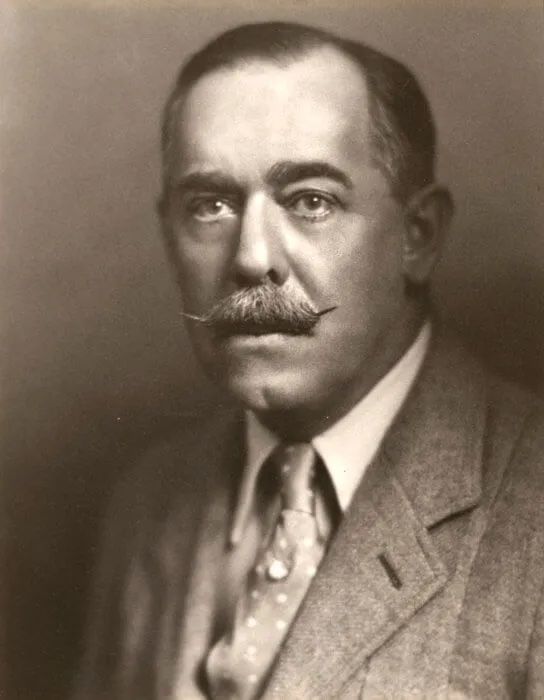
5
1921: A.W. Tillinghast, famed golf course architect, is hired to design the course.
To ensure the course matched the club’s ambitions, the renowned architect A.W. Tillinghast was engaged to design the layout. His involvement signaled a commitment to quality from the very beginning—and set the stage for a golf experience built to stand the test of time.
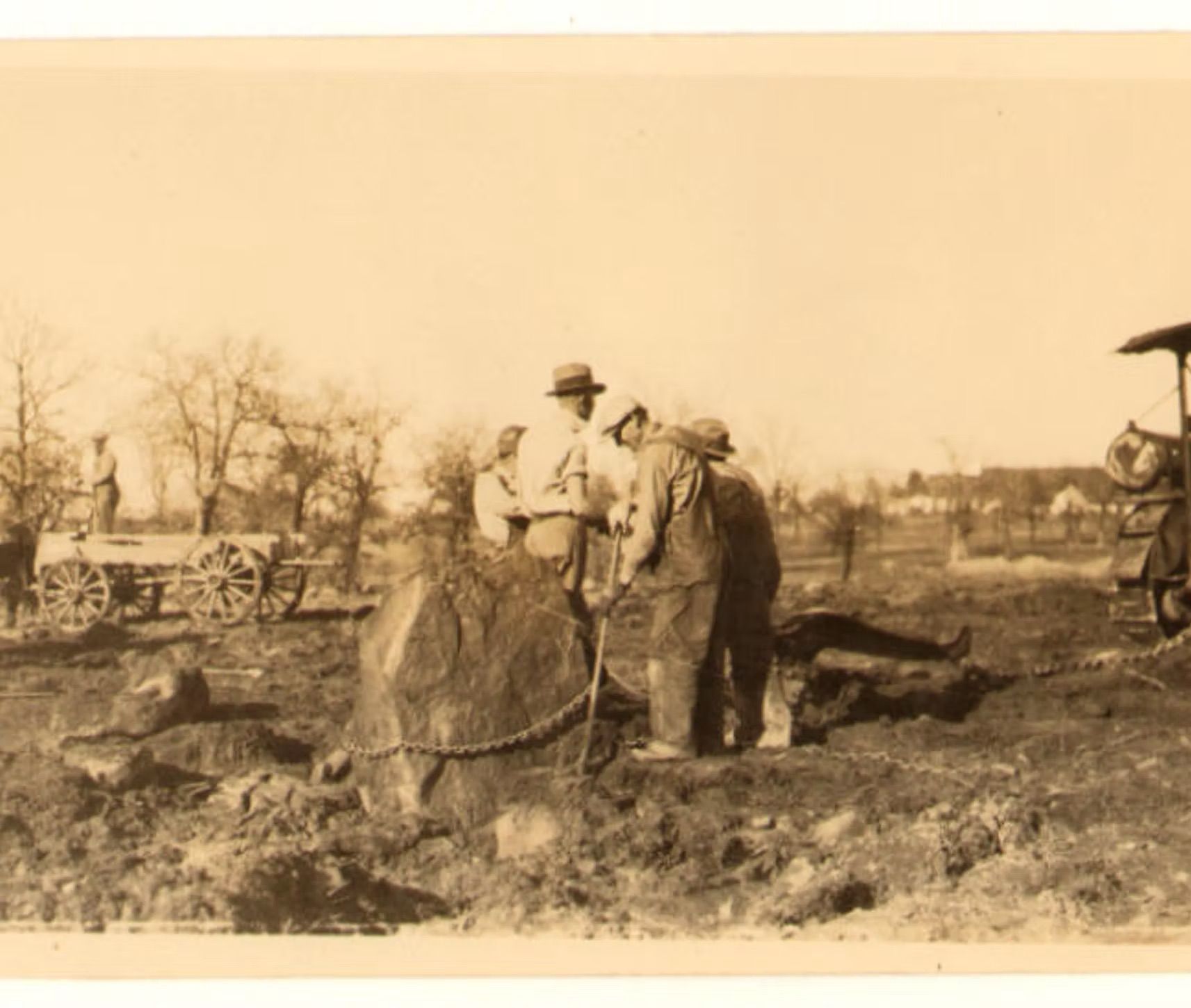
6
1922: Construction of the first clubhouse begins at a cost of $100,000; temporary sand greens in play.
With the course taking shape, early play began on temporary sand greens, allowing members to enjoy the property while the club was still being built. Plans for a grand clubhouse soon followed—designed as a true gathering place and “showpiece” facility for members and guests.

7
1924: Official grand opening of the clubhouse and course; Bermuda grass introduced.
In June of 1924, the club celebrated a formal grand opening—a milestone marked by spirited events, hospitality, and community pride. That same era also brought key course improvements, including the introduction of Bermuda grass, helping elevate playing conditions as the club entered a new chapter.
1930s–1940s – Depression, Renovation, and Revival
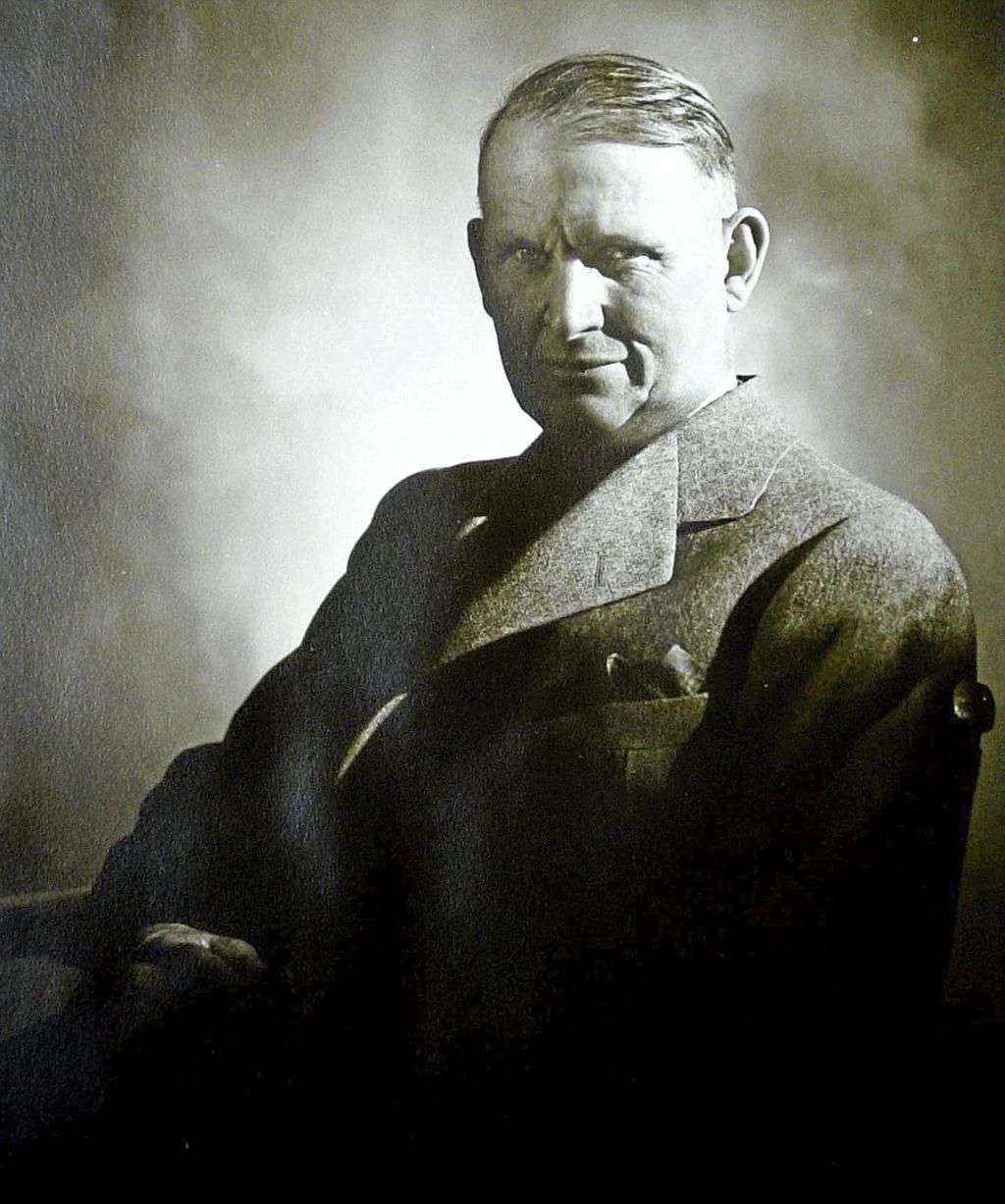
1
1937: Course renovation by Perry Maxwell, including rebuilding of seven greens.
In 1937, famed Oklahoma architect Perry Maxwell guided a significant renovation, including the rebuilding of seven greens. His naturalistic style—working with the land rather than against it—helped strengthen the course’s character and long-term playability.
2
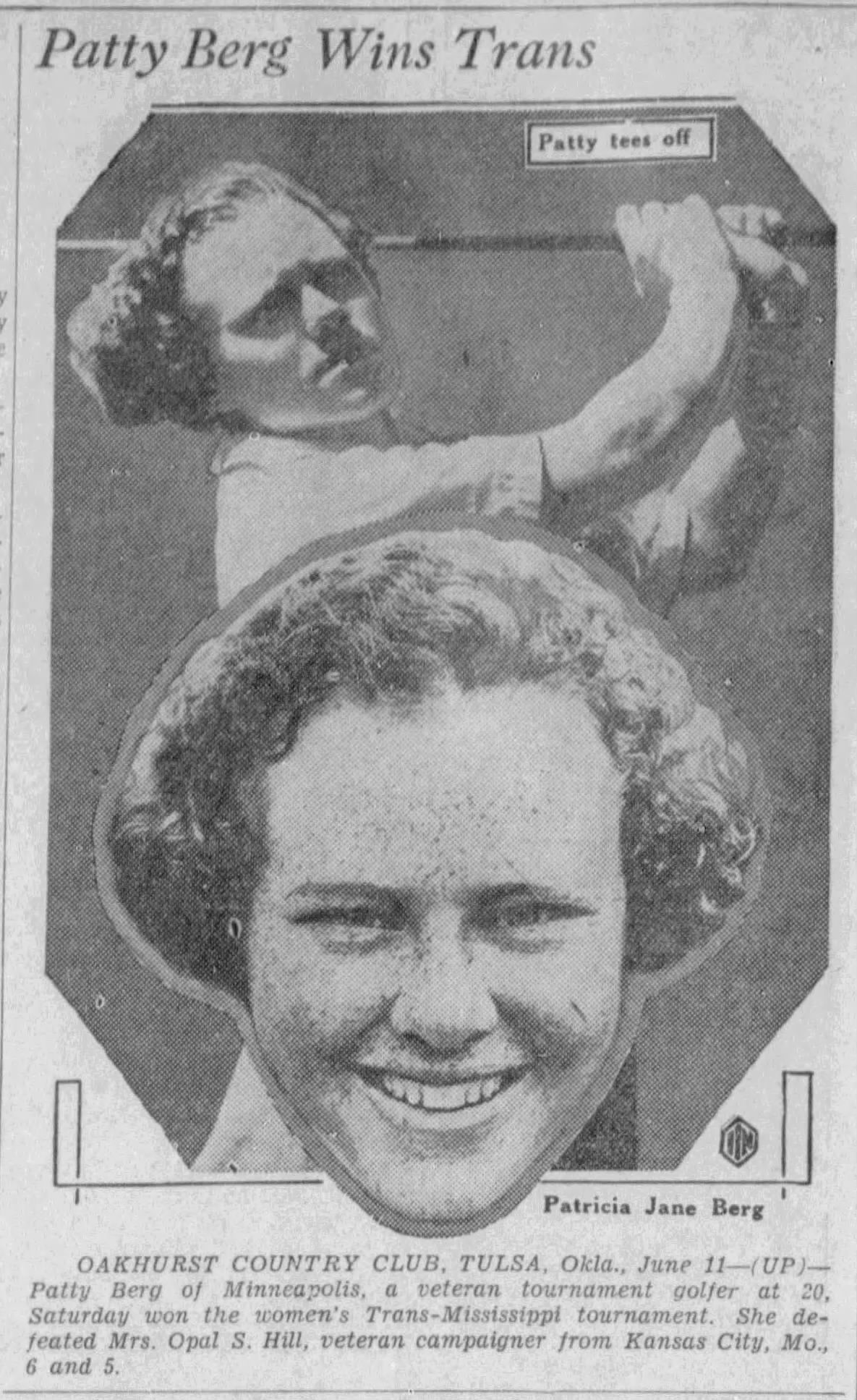
1938: Hosts Women’s Trans-Mississippi Golf Championship, won by Patty Berg.
The club’s growing reputation reached a national stage in 1938 when it hosted the Women’s Trans-Mississippi Golf Championship. The week brought top competitors, memorable social events, and championship drama—culminating in a victory by Patty Berg, who would go on to become one of the most celebrated figures in women’s golf.

3
1944 (April 12): The club is foreclosed and purchased at a sheriff’s auction for $38,600 by Walter Ahrens and a group of investors.
World War II placed immense pressure on clubs across the country, and the Oaks property was not immune. In 1944, following foreclosure,
Walter Ahrens and a small group of investors stepped in—purchasing the club at a sheriff’s auction and keeping the property and its future intact during an uncertain time.
1950s–1980s – Member Ownership and Growth

1
1950: Oklahoma Junior Girls Golf Championship founded at Oaks by Mabel Hotz, becoming the largest junior girls’ program in the U.S.
In 1950,
Mabel Hotz
helped establish the
Oklahoma Junior Girls Golf Championship at Oaks—an event that quickly became a cornerstone of junior golf. What began modestly grew into one of the most influential junior girls programs in the country, reinforcing Oaks as a place where the game—and young talent—could thrive.
2
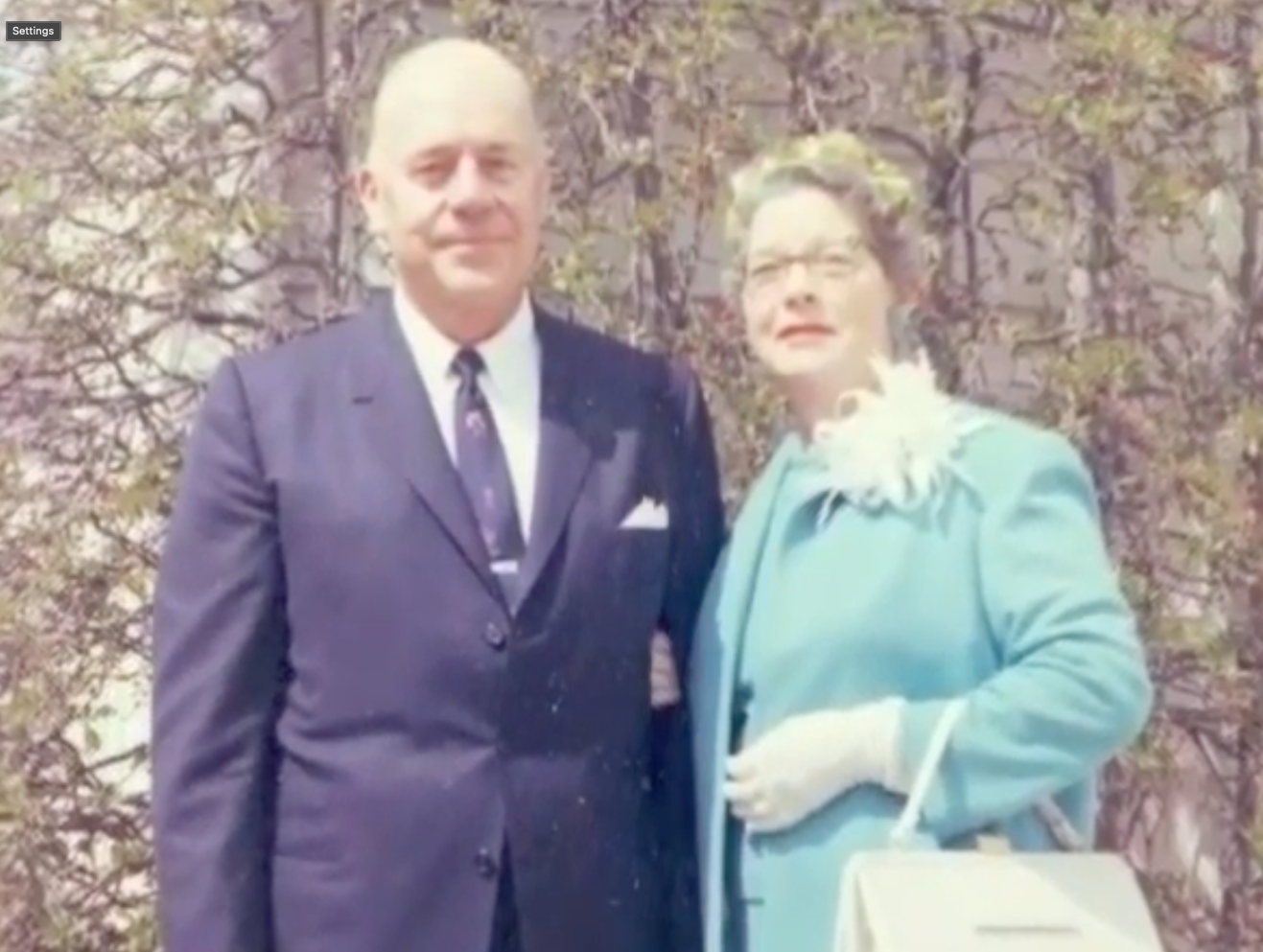
1952: Members buy the club, renaming it Oaks Country Club, debt-free with 420 members.
A defining milestone came in 1952 when the members officially purchased the club, renaming it
Oaks Country Club. Achieving the goal with
420 members, the club entered member ownership
debt-free—a remarkable accomplishment that ensured long-term stability and a strong future.
3
1960: Oaks hosts the USGA Junior Girls Championship, chaired by Mabel Hotz.
Building on its junior golf leadership, Oaks hosted the
USGA Junior Girls Championship in 1960, with Mabel Hotz serving as general chairman. The event confirmed Oaks’ standing as a trusted host for championship golf—and a leader in growing the women’s game.

4
1967: New golf shop completed. 1969: Swimming pool and recreation complex constructed.
A new
golf shop was completed in 1967, improving day-to-day service and enhancing the overall golf operation for members and guests. In 1969, Oaks expanded beyond golf with the construction of a
swimming pool and recreation complex, further establishing the club as a place for families, friendships, and year-round community.
5
1974–1980: Major renovations, including putting green, locker room remodels, and Oakleaf Dining Room addition.
From 1974 through 1980, Oaks entered an era of meaningful upgrades—enhancing practice areas, remodeling locker rooms, and adding the
Oakleaf Dining Room, strengthening both the golf and social experience at the heart of the club.

6
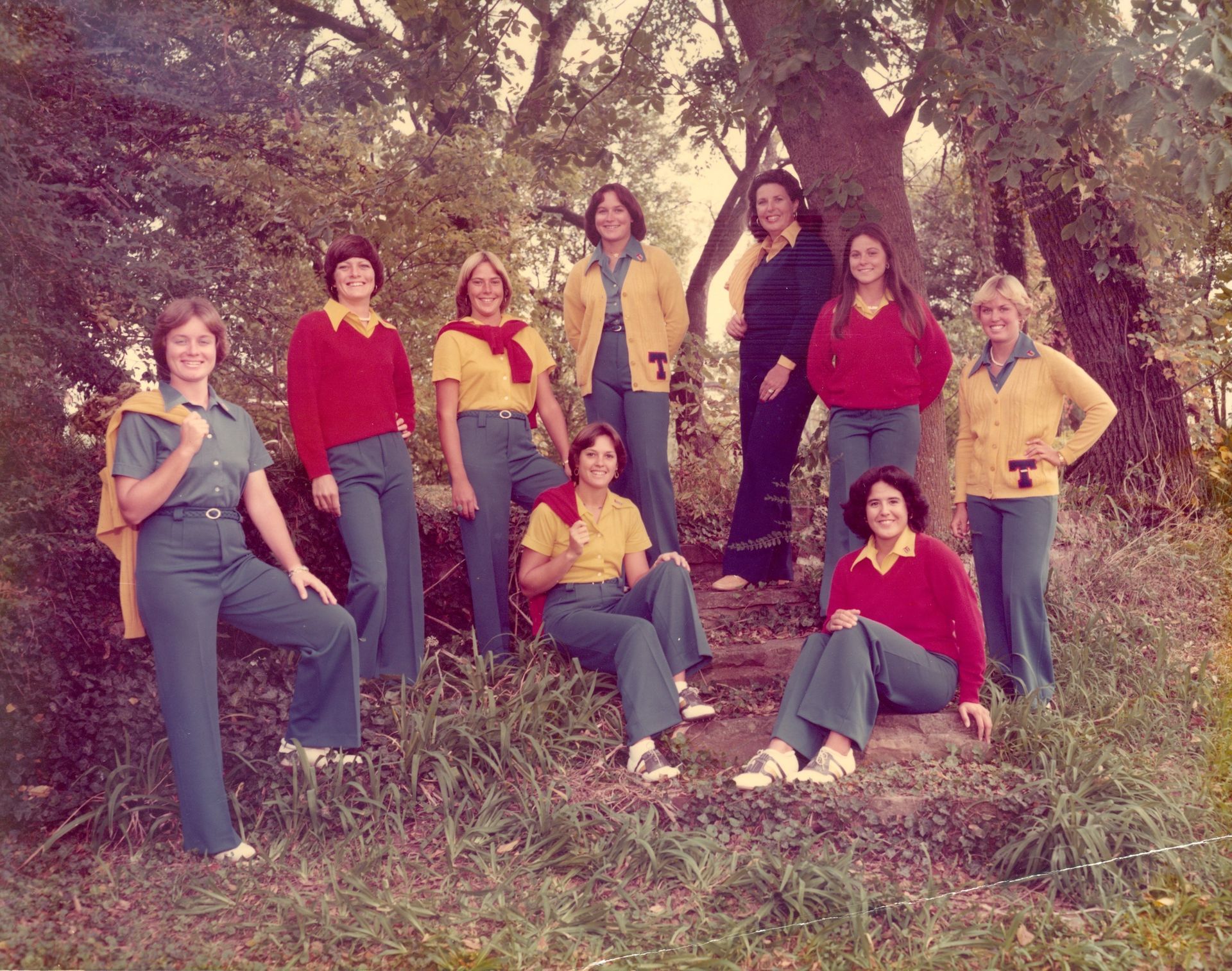
1975: Hosts Women’s Trans National Amateur Championship, where Nancy Lopez competes and Patty Berg is honored.
In 1975, Oaks once again welcomed elite women’s amateur golf as host of the
Women’s Trans National Amateur Championship. The week bridged generations—featuring rising stars like
Nancy Lopez, while also honoring
Patty Berg, whose championship legacy at Oaks dated back to 1938.
1990s–2010s – Modernization
1
1990–2004: Clubhouse modernization and course enhancements.
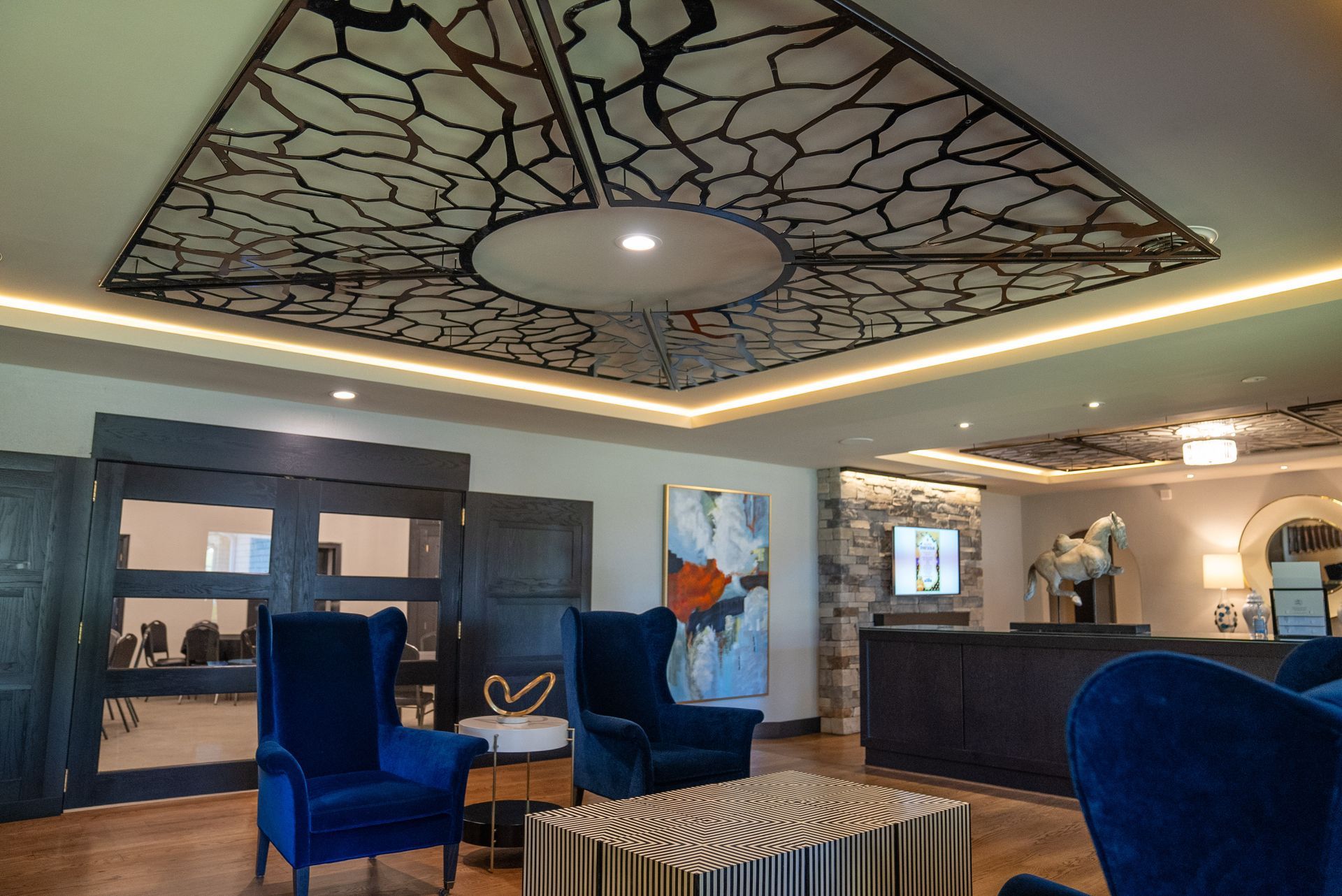
From 1990 through 2004, Oaks made major investments in the member experience—renovating clubhouse interiors, installing a new sprinkler system with a pipeline from Pole Cat Creek, completing a Tom Hoch-designed clubhouse renovation with updated golf shop and locker rooms plus the A.W. Tillinghast Bar, and rebuilding bunkers to elevate course conditions.
2
2014: Membership approves a $7.2 million two-phase renovation plan
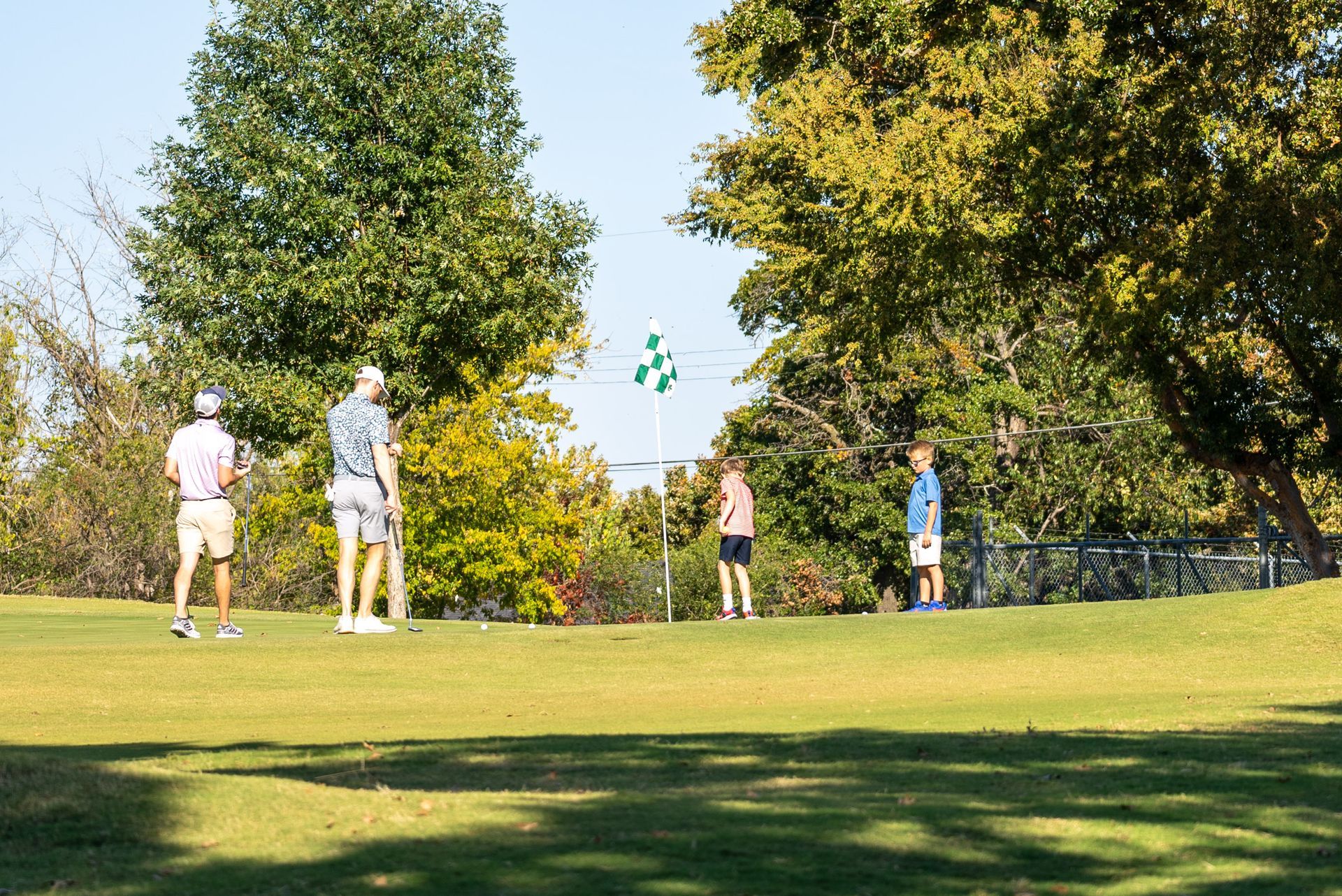
In 2014, membership approved a $7.2 million, two-phase plan to upgrade the swimming pool and deck, add The Acorn— a six-hole par-3 short course for juniors and families—and deliver targeted golf course enhancements.
3
2015–2018: Tillinghast restoration and dining-focused renovations.
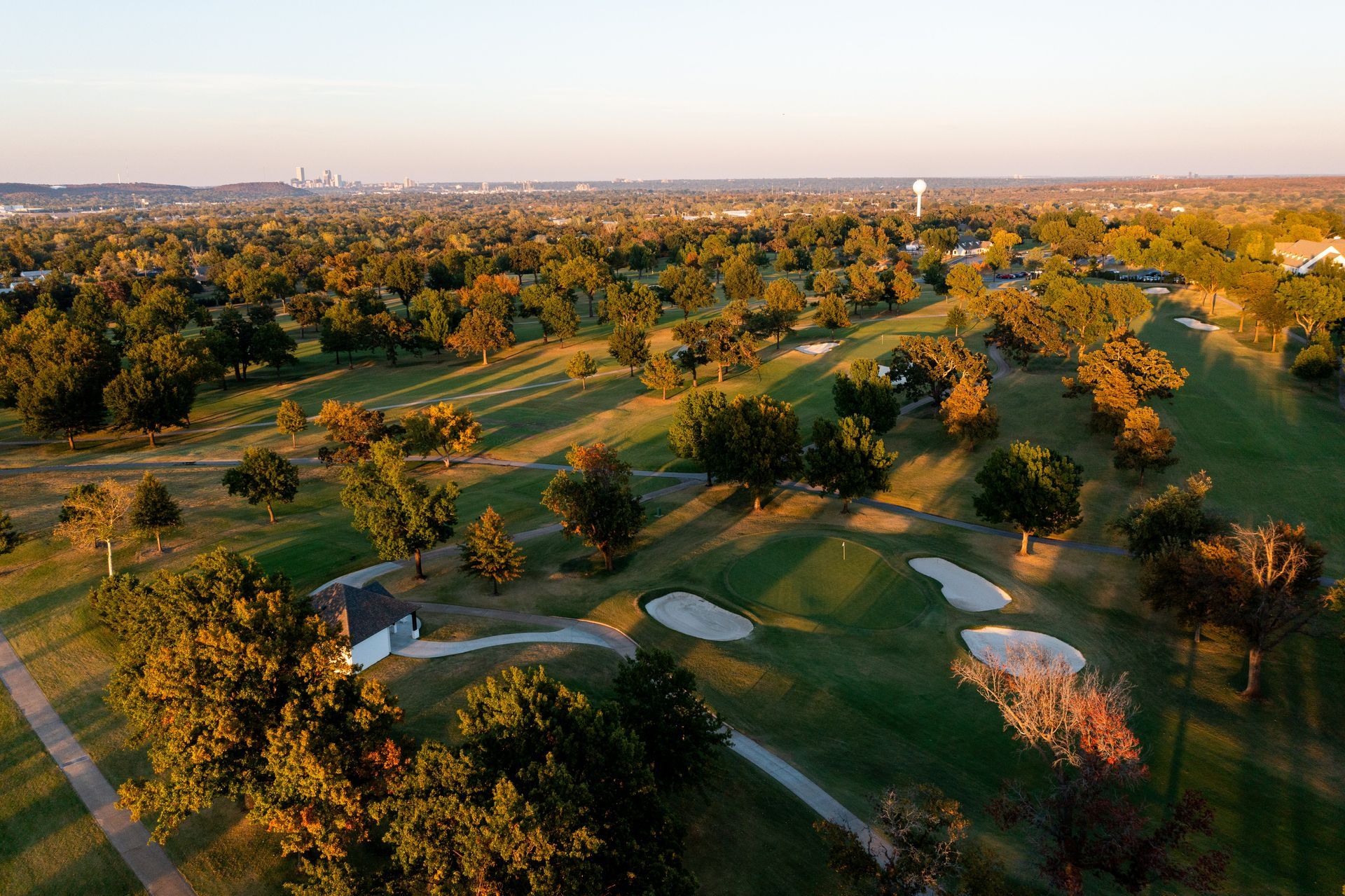
Beginning in 2015, Oaks launched a course restoration with architect Bill Bergin to revive A.W. Tillinghast’s original design intent, and in 2018 completed the next renovation phase with major dining upgrades and expanded family and social facilities.
1990s–2010s – Centennial Legacy and Vision 2030
1
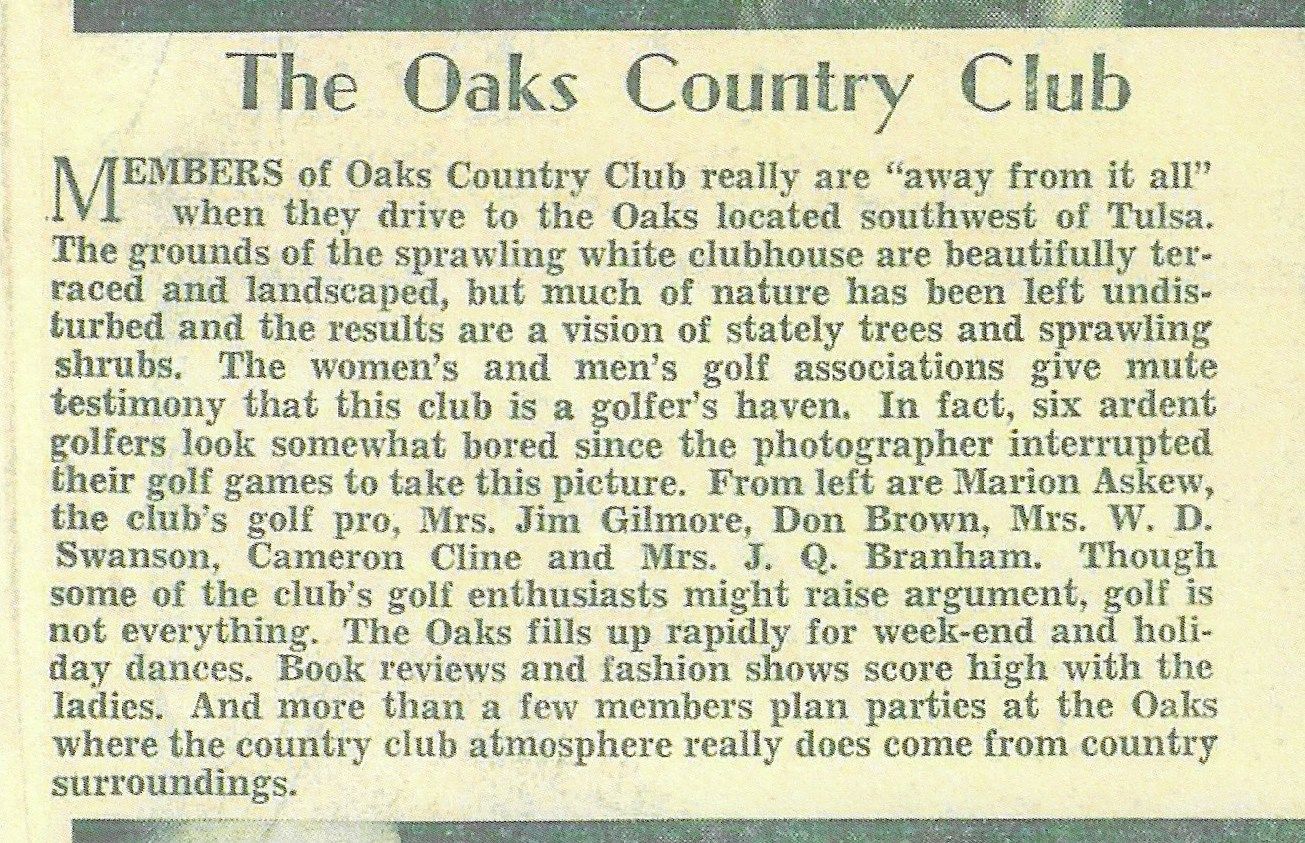
2021: Oaks Country Club celebrates 100 years.
Oaks Country Club marks its 100th anniversary—celebrating a century of championship golf, enduring traditions, and the community of members and families who have shaped the club’s legacy.
2
2025: Ongoing execution of Vision 2030 Strategic Plan, including
- Master Facilities Plan (pool deck expansion, fitness center, playground, dining upgrades).
- Golf Course Master Plan (irrigation and practice facilities).
- Enhanced family programming and member experience.
- Focus on financial stewardship and sustainable growth.
1920s – Founding and Formation
April 11, 1920
A group of Tulsa businessmen publish a notice calling for a new country club.
May 11, 1920
The club is officially incorporated as Golfers Country Club.
June 16, 1921
Land purchased for 160 acres southwest of Tulsa.
Summer 1921
Renamed Oakhurst Country Club after the nearby village of Oakhurst.
1921
A.W. Tillinghast, famed golf course architect, is hired to design the course.
1922
Construction of the first clubhouse begins at a cost of $100,000; temporary sand greens in play.
1924
Official grand opening of the clubhouse and course; Bermuda grass introduced.
1930s–1940s – Depression, Renovation, and Revival
1930
Bent grass greens installed.
1937
Course renovation by Perry Maxwell, including rebuilding of seven greens.
1938
Hosts Women’s Trans-Mississippi Golf Championship, won by Patty Berg.
April 12, 1944
The club is foreclosed and purchased at a sheriff’s auction for $38,600 by Walter Ahrens and a group of investors.
1947
Membership drive begins to transition the club to member ownership.
1950s–1980s – Member Ownership and Growth
1950
Oklahoma Junior Girls Golf Championship founded at Oaks by Mabel Hotz, becoming the largest junior girls’ program in the U.S.
1952
Members buy the club, renaming it Oaks Country Club, debt-free with 420 members.
1957
Clubhouse remodel adds kitchen, ladies’ locker room, and expanded lounge.
1960
Oaks hosts the USGA Junior Girls Championship, chaired by Mabel Hotz.
1965
Sprinkler system installed for fairways and greens.
1967
New golf shop completed.
1969
Swimming pool and recreation complex constructed.
1974 - 1980
Major renovations including putting green, locker room remodels, and Oakleaf Dining Room addition.
1975
Hosts Women’s Trans National Amateur Championship, where Nancy Lopez competes and Patty Berg is honored.
1987 - 1989
New southern entrance from 71st Street, expanded parking, practice range upgrade
1921
Founding Year
Oaks is one of the oldest country clubs in Tulsa, Oklahoma.
The concept of the club came from William Weichel and Walter Ahrens, who had been separately rallying for a new Tulsa country club. The two men joined forces and formed a 45-member charter called the Golfer’s Club Association. A site selection committee recommended the present location for the home of the new club, and the 312 acre property was cleared of over 2,000 oak trees. In honor of the many trees, the association’s name changed to Oakhurst Country Club.
A.W. Tillinghast, a member of the World Golf Hall of Fame & Museum, designed the original 18-hole course. His basic philosophy was that nature must precede the architect in the laying out of a golf course, and he had an uncanny ability of fitting 18 holes of golf to the natural contour of the land available. Another of his trademark designs is also featured on the course: begin with three relatively easy holes and end with three rather difficult holes. Oakhurst Country Club was sold to its members in 1947, and the Oaks Country Club was born.
In 2014, the membership voted in support of a two-phase $7.2 million renovation plan. The first phase was completed May 2015 which included the golf course, pool and pool clubhouse improvements. The golf course renovations include new greens, bunkers, additional tee boxes, improved cart paths and fairways. The pool facility includes a new recreation pool with a state-of-the-art slide feature and new decking which will enhance our existing pools. The second phase of the project, beginning in 2018, will include improvements to the member indoor and outdoor dining areas.
From the elegance of a striking hilltop location, to the natural beauty of an 18-hole Tillinghast-designed championship golf course, the Oaks truly is the best kept secret in Tulsa.
18-hole
Course